

HEALTHCARE AI DEVELOPMENT SERVICES
Healthcare AI development team experienced in building clinical solutions
MindSea brings deep healthcare experience to every engagement, helping you deploy AI that strengthens care delivery. From early planning through launch, we stay close to your team to ensure reliable outcomes.








Clinical settings demand secure AI solutions and a partner who protects your patient data
Common challenges
- Projects stall because developers overlook compliance requirements
- Teams struggle to integrate AI with EHRs and legacy systems
- Low engagement limits data collection and study validity
- Models behave unpredictably due to poor data foundations
- Vendors disappear after launch, leaving teams unsupported
How we solve them
- Build HIPAA-ready workflows grounded in rigorous safeguards
- Integrate AI with existing systems for dependable operations
- Design patient-first UX that strengthens engagement and retention
- Apply responsible AI methods to improve accuracy and equity
- Stay hands-on post-launch to ensure reliability and scale
Where AI fits into the products we build

AI-enabled healthcare workflows
We help teams integrate existing AI capabilities into healthcare products in a way that fits clinical workflows, privacy requirements, and real-world constraints.

Applying healthcare chatbots
We help clients evaluate, configure, and integrate AI assistants and chatbot platforms into their products where they make sense.

LLM integrations with healthcare apps
Embed safe, governed language models that summarize charts, streamline workflows, and boost clinician efficiency without compromising security or accuracy.

Clinical decision support integrations
We help teams integrate decision-support tools and evidence-based logic into clinical workflows.

AI data summarization for medical apps
We integrate existing language models to assist with summarizing clinical data, notes, and reports inside medical applications.

Enabling predictive diagnostics and early detection
We help teams surface trends, thresholds, and risk signals from health data using established analytics and machine learning tools.
Need something unique?
How we work
1
Design mobile UX based on user stories
We translate your research goals into intuitive user flows and wireframes, ensuring the app is simple, inclusive, and engaging from the start.
2
Create a clickable prototype
You’ll get a working model to test with stakeholders, refine requirements, and build confidence before committing to full development.
3
Develop front and back end app functionality
Our engineers build the complete application—front end, back end, and integrations—so it’s scalable, reliable, and ready for launch.
4
Ensure data and privacy compliance throughout
From day one, we embed HIPAA, PHIPA, GDPR, and SOC-2 standards into your app architecture, so your data collection is secure and research-ready.
In Practice
What a healthcare AI app looks like in practice
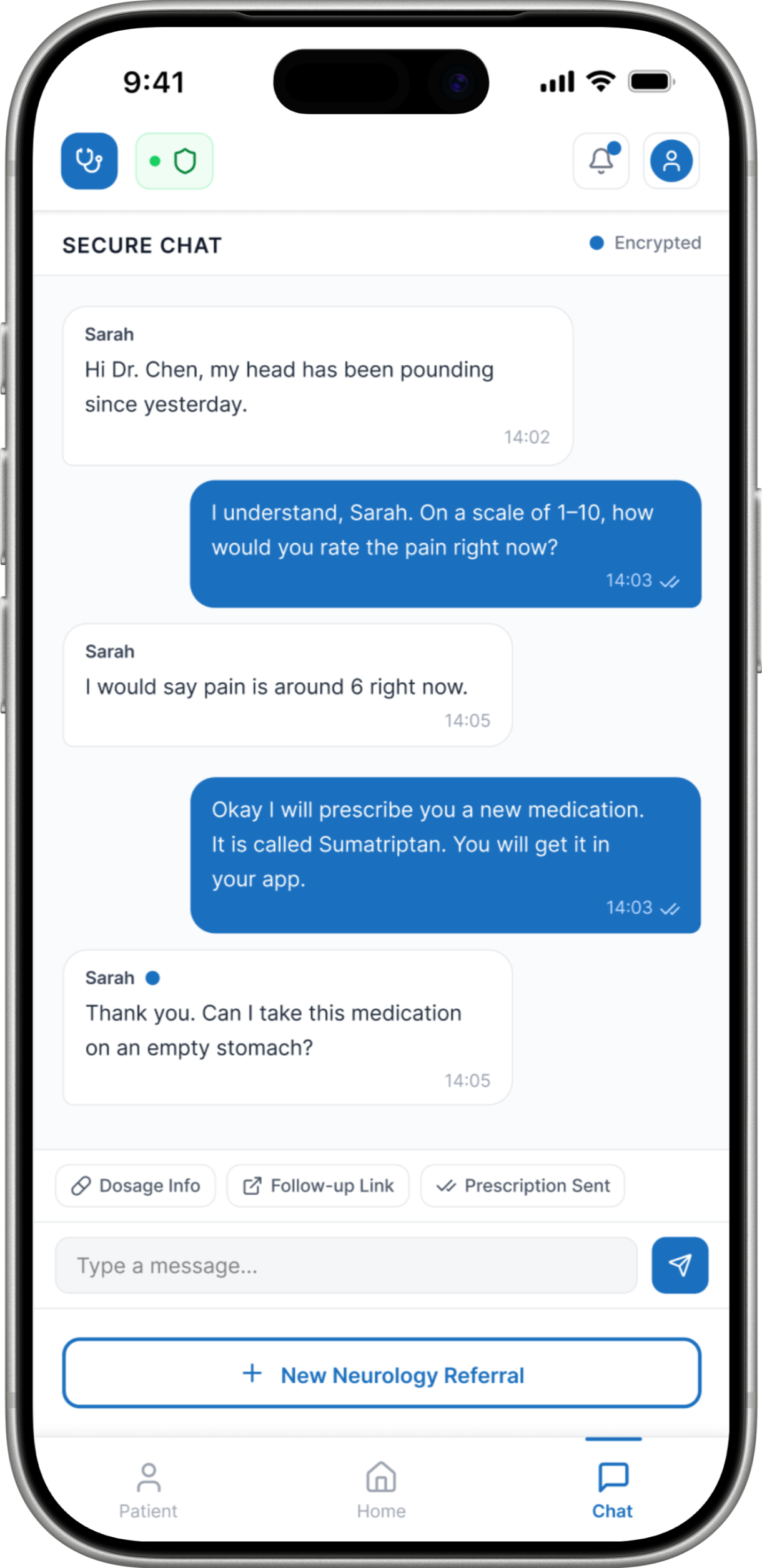
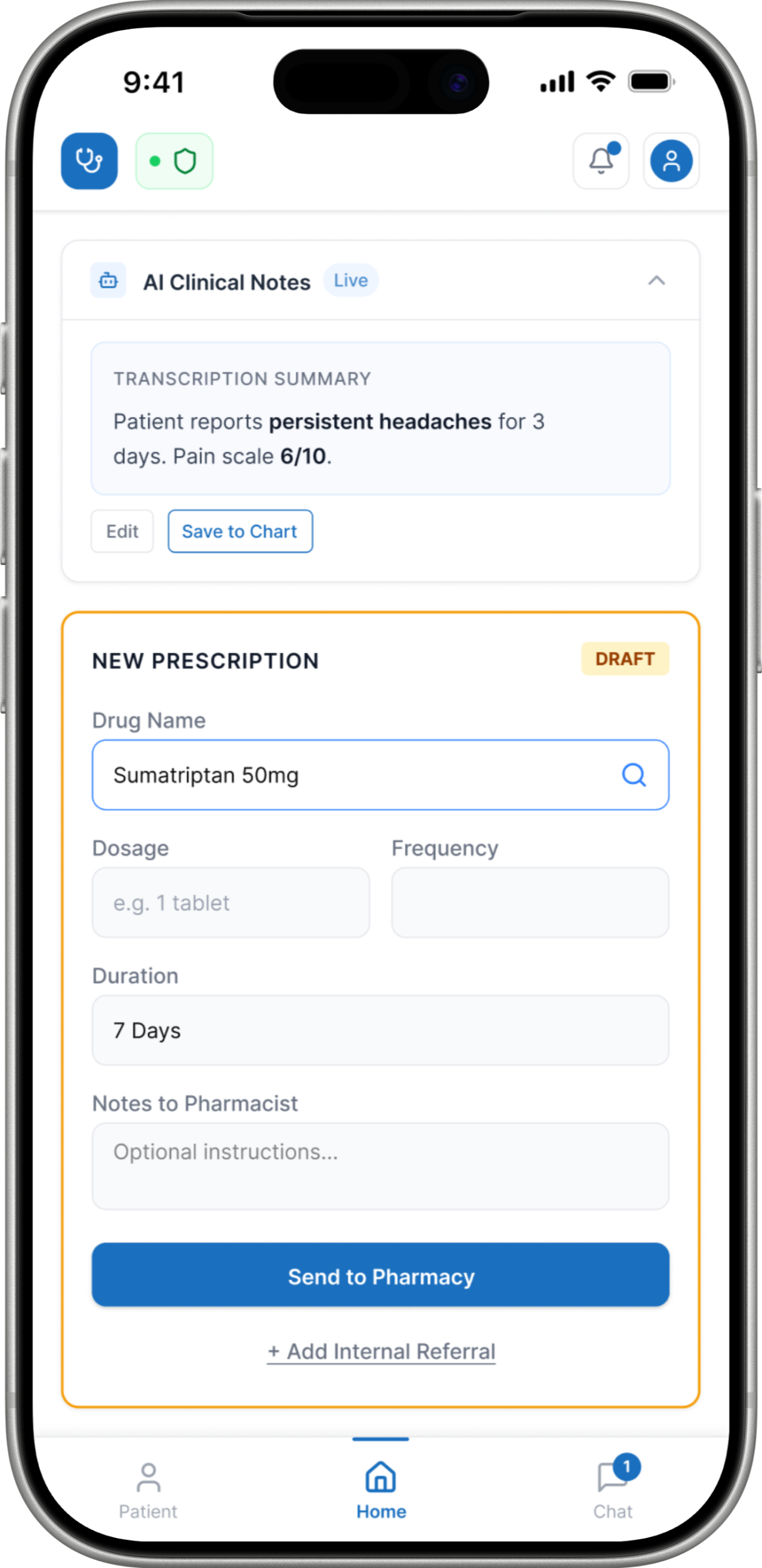
A healthcare AI app handles the work around the work, summarizing patient histories, drafting clinical notes, and surfacing risks that a clinician might otherwise miss in a busy shift.
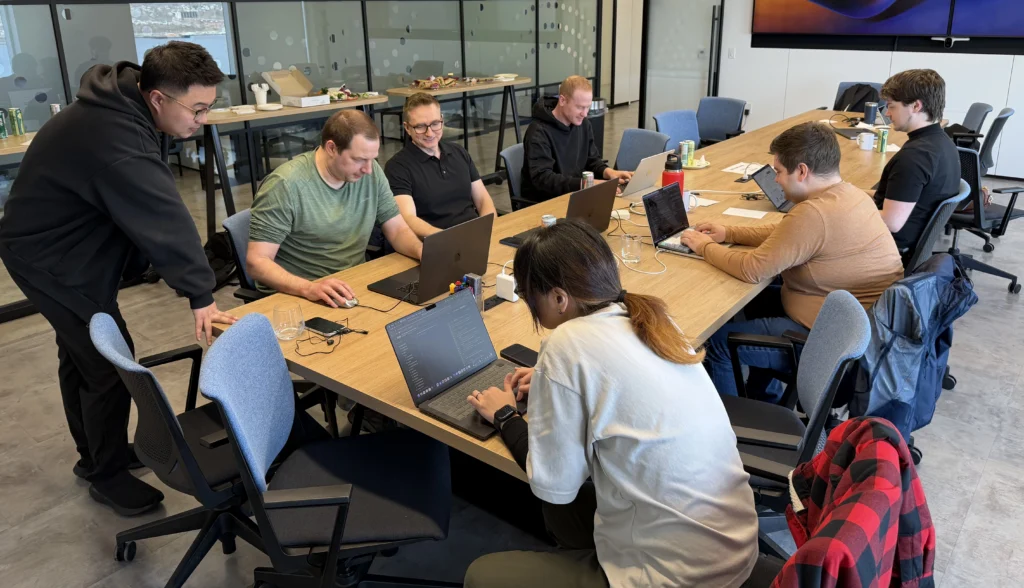
Meet our Canada-based dev team

5-star rating on Clutch.co

“Lots of people talk about partnership, but it’s not always achieved. MindSea came through on that end.”
—Lorne Segal, Co-Founder, Bariatric Medical Institute
18 years
serving clients with reliable apps
10 million+
lives impacted
250+
successful projects delivered
Case studies

CHARM-COPD remote patient monitoring app
Researchers at the University Health Network, Sunnyrook Health Sciences Centre, and the University of Toronto wanted a dependable way to detect COPD flare-ups earlier and support patients between appointments. We built a remote monitoring app to support future AI-driven predictive analytics that surface rising risk levels sooner, giving clinicians a clearer window for timely intervention.

Ready to see what’s possible for your users?
Book a call with Alex Ferrari, VP Partnerships
If we’re a good fit, we’ll match you with the right team to implement your vision.
Resources about AI healthcare applications



Let’s start creating
Not sure if we’re the right team for you?
Book a free consultation and let’s find out!
FAQs
What are the most common AI-powered features in healthcare apps?
Teams often use AI for symptom intake, care navigation, chart summarization, risk prediction, and workflow automation. These capabilities strengthen engagement and free clinicians to focus on higher-value care.
How do you ensure HIPAA compliance for AI healthcare apps?
We follow a structured process covering data mapping, encryption, access control, governed model use, and secure hosting. Compliance work begins at kickoff and continues through launch and monitoring. Read our comprehensive guide on building HIPAA compliant apps.
How is patient data handled, stored, and secured?
PHI is encrypted in transit and at rest, access is role-based, logs are retained securely, and environments use approved cloud providers. Only de-identified or synthetic data is used in development.
How do you prevent bias and ensure equity in the AI’s outcomes?
When integrating third-party AI tools, we focus on transparency, guardrails, and human oversight. We help teams understand model limitations, configure appropriate use cases, and design workflows where outputs can be reviewed, challenged, and audited rather than blindly trusted.
Can AI features be integrated with existing systems like EHRs?
Yes. We help integrate AI-enabled features with existing systems such as EHRs, databases, and internal tools using secure APIs and standard healthcare data patterns. The goal is to fit into existing workflows rather than disrupt them.
What data do you use when AI features are added to an application?
We design AI integrations so customer data is processed securely and only for the intended purpose. We help teams understand how third-party AI providers handle data, configure appropriate privacy settings, and ensure sensitive information is not retained or reused outside the agreed scope.
“MindSea implemented design solutions in places where we would never have thought to put them… What we’ve got now is something that we’re really proud of.”
– Russ Patterson
CEO, HALTERIX