

CLINICAL DECISION SUPPORT SOFTWARE DEVELOPMENT
Clinical decision support software development that transforms care delivery
At MindSea, we design and develop custom clinical decision support software (CDSS) that help clinicians make faster, more informed decisions. We work as a long-term partner, delivering secure, dependable tools that strengthen clinical confidence and patient outcomes.
Trusted by healthcare teams across the US & Canada






Critical hurdles in CDSS development,
and how we address them
Common challenges
- Projects stall due to complex compliance and regulatory requirements
- Difficulty integrating apps with EHRs, legacy systems, and multiple data sources
- Alert fatigue or low clinician adoption reduces effectiveness of recommendations
- Ensuring recommendations remain evidence-based and up to date
- Vendors exit post-launch, leaving teams unsupported
How we solve them
- Build HIPAA-ready workflows for secure, compliant operations
- Integrate apps seamlessly with existing EHRs and clinical systems for dependable performance
- Design clinician-first UX that maximizes engagement and retention
- Ensure recommendations and alerts are evidence-based and actionable at the point of care
- Maintain hands-on support post-launch to ensure reliability and scale
Clinical decision support software development services we offer:
Clinical decision support apps
Deliver evidence-based, AI-informed guidance to clinicians, improving intervention timing and patient outcomes.
Predictive diagnostics and early detection
Use data-driven models to identify risks sooner, guiding preventive care and improving study accuracy.
Healthcare AI integrations
Integrate AI-driven insights directly into clinician workflows and EHRs, delivering timely, evidence-based recommendations that support decision-making and improve patient outcomes.
UX design for clinical adoption
We study clinician workflows, user needs, and real-world usage data to design interfaces that integrate seamlessly into care, ensuring recommendations are seen, understood, and acted on.
Clinician dashboards and decision assistants
Provide real-time insights and workflow tools that help clinicians make informed decisions faster.
Integrated data and analytics
Connect multiple data sources into actionable dashboards for research teams and care providers.
How we work
1
Shape the product with your clinical team
We align on user needs, decision points, and data requirements together, grounding the roadmap in real clinical workflows and regulatory constraints.
2
Prototype and validate with stakeholders
Interactive prototypes allow clinicians and researchers to test usability, refine logic, and confirm fit within day-to-day care environments.
3
Engineer for clinical reliability and integration
Our team builds secure, production-ready apps that integrate with EHRs, devices, and datasets, ensuring dependable performance in high-stakes clinical settings.
4
Support adoption, scale, and ongoing care delivery
Post-launch, we remain hands-on to optimize workflows, maintain compliance, and evolve the product as usage, evidence, and clinical needs grow.
In Practice
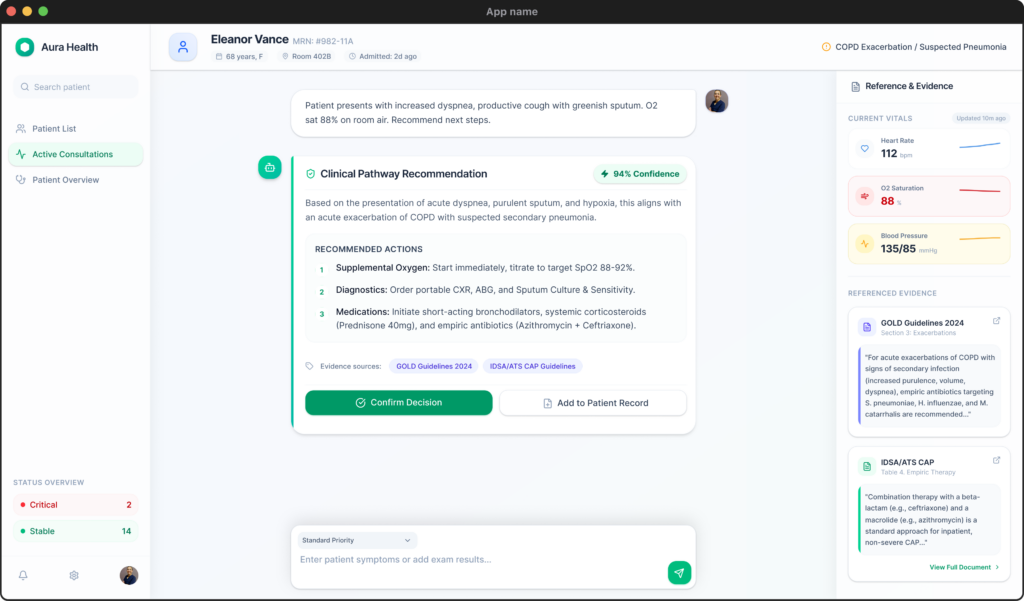
What a clinical decision support app looks like in practice
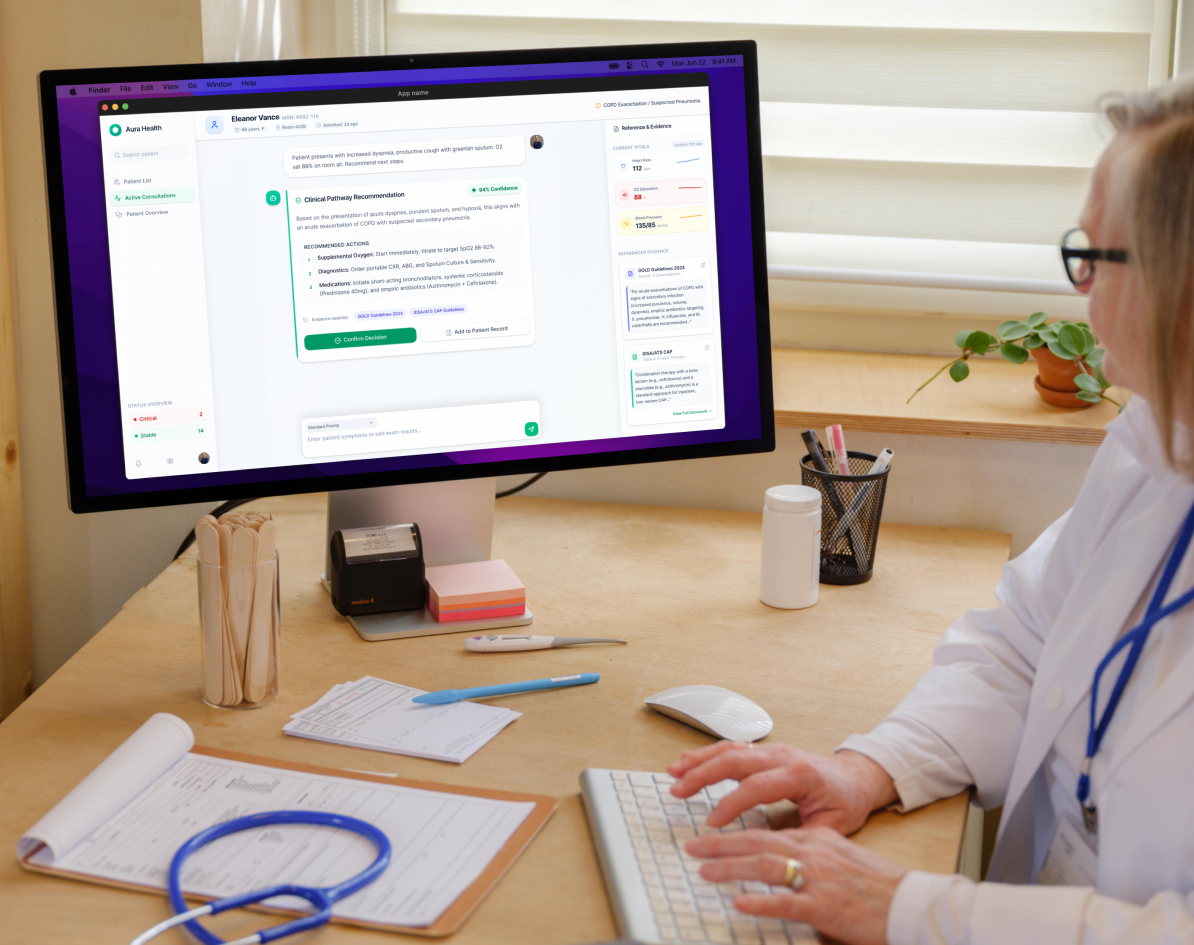
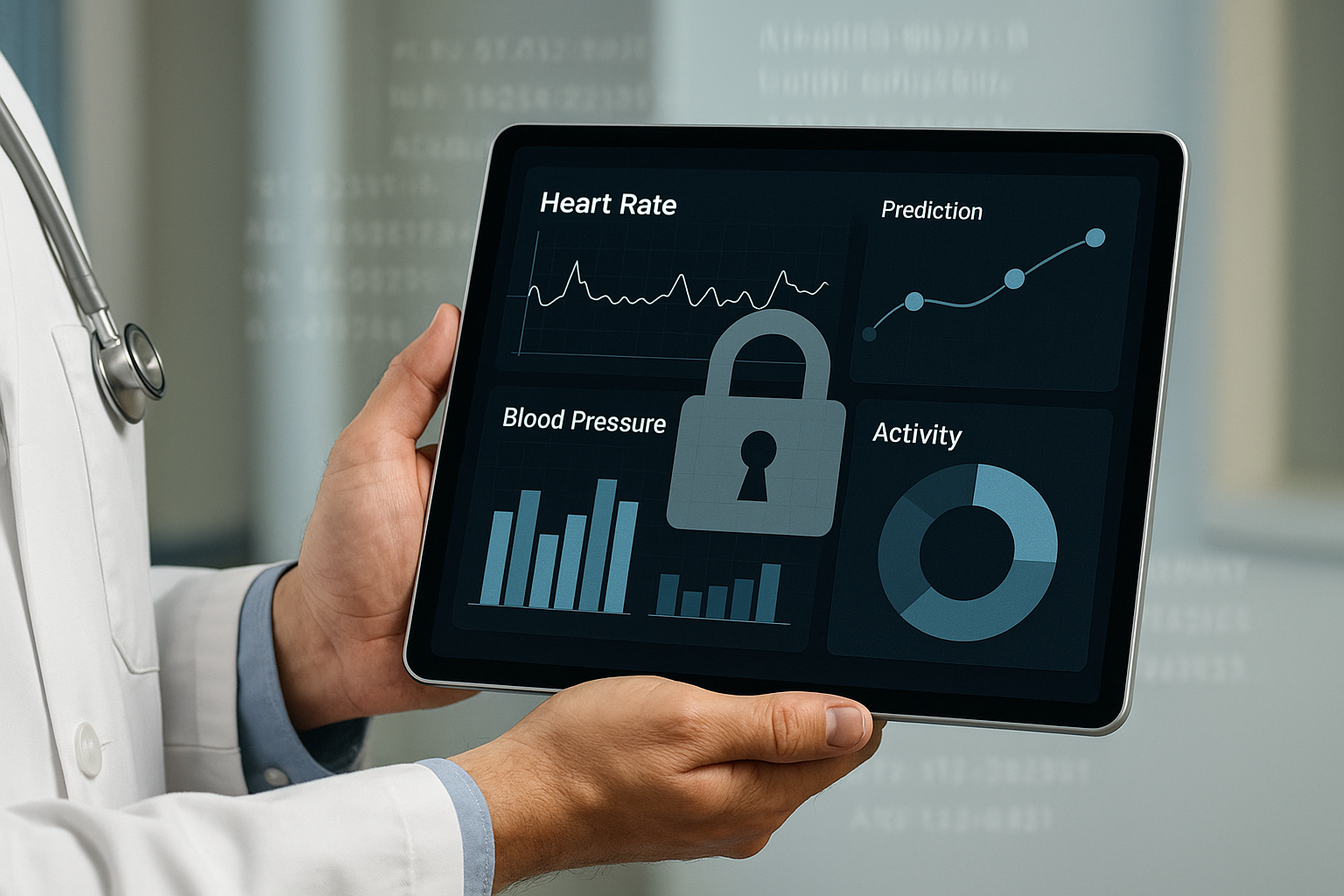
A CDSS app sits next to the clinician at the point of care, pulling patient data into a recommendation engine that suggests pathways, flags risks, and references the clinical evidence behind every call.
18 years
serving clients with reliable apps
10 million+
lives impacted
250+
successful projects delivered
Case study
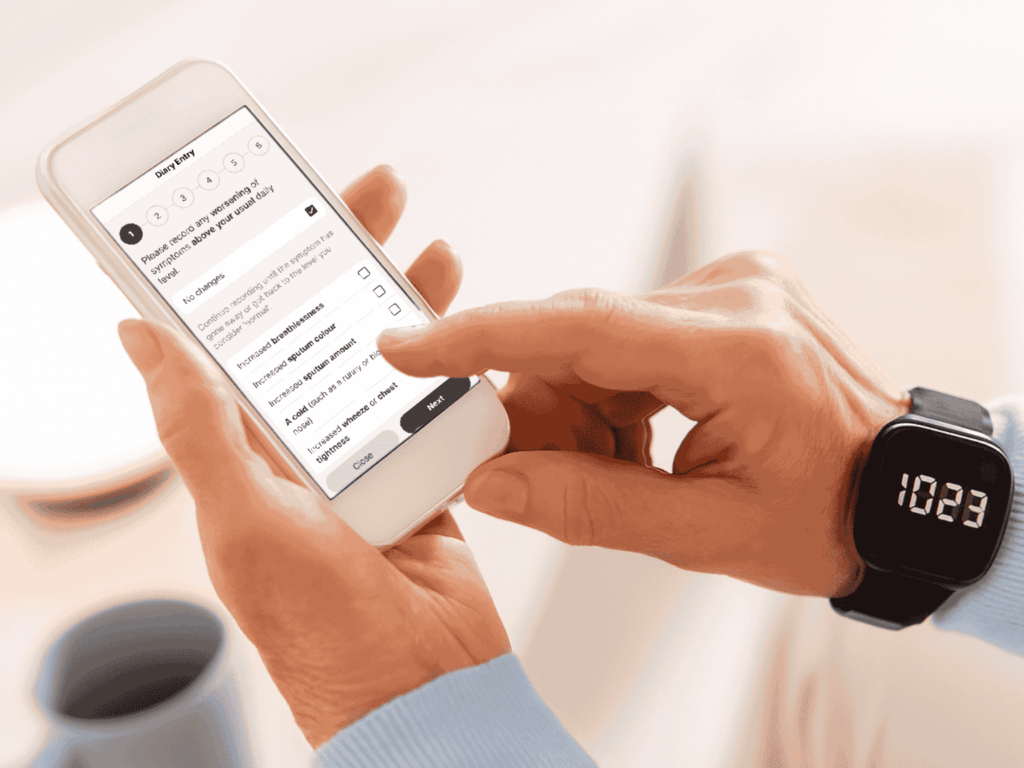
CHARM‑COPD: Supporting clinical decision-making for at-home COPD care
In partnership with UHN, Sunnybrook Health Sciences Centre, and the University of Toronto, we built the CHARM‑COPD app to bring actionable at‑home COPD data into a clinician dashboard. The platform gives care teams an at-a-glance view of patient symptoms and trends, supports batch review of daily diary entries, sends automated alerts when conditions change. It integrates with hospital login systems to streamline workflow, which helps clinicians make timely, informed treatment decisions.
“MindSea had excellent processes, and also were a delight to work with because of the professionalism and friendliness of all members of the team. The service felt bespoke and personalized.”
– Maryann Calligan
Clinical Research Coordinator, University Health Network


Want to learn more?
Book a call with Alex Ferrari, VP Partnerships
If we’re a good fit, we’ll match you with the right team to implement your vision.
Clinical decision support software development resources


Let’s start creating
Not sure if we’re the right team for you?
Book a free consultation and let’s find out!
FAQs
What are the essential features of modern clinical decision support software?
Modern CDSS include evidence-based guidance, patient-specific recommendations, alerts for high-risk events, integration with EHRs, and analytics dashboards to support clinician decisions.
How do I integrate clinical decision support apps with EHR systems?
We connect apps to EHRs via secure APIs, ensuring data integrity, workflow alignment, and real-time insights without disrupting existing operations.
What are the best platforms for building clinical decision support apps?
Platforms depend on security, scalability, and interoperability needs. Mobile frameworks like React Native and back-end cloud solutions are common for healthcare-grade apps.
What data do CDSS need to give accurate suggestions?
CDSS requires structured patient records, lab results, medication histories, and relevant clinical guidelines to generate actionable, evidence-based recommendations.
What AI methods are used in CDSS?
Machine learning, predictive modelling, and NLP are commonly applied to detect patterns, recommend interventions, and summarize complex clinical data responsibly.
How do LLMs compare to traditional rule-based CDSS?
LLMs offer adaptive, context-aware recommendations across large datasets, while rule-based systems provide deterministic, guideline-driven outputs. Each one suits different clinical needs.