

FOR VIBE-CODED HEALTHCARE APPS
Prototype to Launch
You built a health app with Claude Code, Codex, Lovable, Replit, or Cursor. In two weeks we’ll tell you what it takes to bring a compliant app to market, which parts to keep, and what each phase will cost.
Trusted by healthcare teams at






Where vibe coded health apps get stuck
Tackling the gap between an AI prototype and a real healthcare product.
Common challenges
- You don’t know whether your app is a wellness product, a clinical decision support tool, or a regulated medical device
- The platform hosting your prototype won’t sign a Business Associate Agreement, so real records can’t go in it
- You don’t know how exposed you are to a data leak, or whether users can reach and change data they aren’t supposed to
- No audit trail exists, so you can’t show who viewed or changed a patient record, which HIPAA requires
- The app can’t connect to Epic, Cerner, or a regional EMR
- Scheduling breaks the moment two providers share a calendar
- Insurance claims come back rejected because nobody built the eligibility and coding logic
- Nobody can tell you what the real build costs or how long it takes
How we help
- Classify your product against FDA and Health Canada criteria in week one, before the classification starts driving cost
- Rebuild your data layer on infrastructure covered by signed BAAs with every vendor that touches health data
- Replace demo authentication with role-based access controls and encryption at rest and in transit
- Add audit logging of every record view and change, plus a documented breach notification process
- Scope and build HL7 and FHIR integration, including the sandbox access and approvals each system requires
- Build scheduling that handles shared calendars, cancellations, and double-booking across providers
- Handle eligibility, coding, and rejections so claims process cleanly
- Deliver a phased plan with a cost range on every phase, in two weeks
From vibe code to launch
A fixed two-week engagement for $5,000. If you build with us, the full amount credits toward your first month.
Before kickoff
1
Send us your app’s code, plus a link to your working prototype if you have one. Screenshots tell us far less than something we can click through.
Week one
2
We walk through it with you and map what you built against what healthcare regulations require.
Week two
3
We assess the technical and regulatory picture behind the screens.
End of week two
4
You get the plan and review it live with our team. Then you decide what happens next.
What you walk away with
Code and architecture review.
We review your code to understand how it’s built, including your data model, authentication, and dependencies. Then we tell you what you can keep and what needs rebuilding before real patients use it. You’ll know how much of your work you’re keeping before you pay for engineering.
Security and vulnerability assessment.
AI coding tools leave the same holes every time. We check for exposed API keys, authentication the browser enforces instead of the server, and missing rate limits, then rank what we find by severity.
Regulatory classification opinion.
We assess your product against HIPAA, PIPEDA and PHIPA, and FDA Software as a Medical Device guidance where it applies. You get it in writing: whether your app counts as a wellness tool, a clinical decision support system, or a regulated medical device. We also spell out what that answer requires of you.
Data handling and vendor requirements.
We identify where sensitive data would enter your system and how it needs to be stored and protected. You also get the list of vendors that need signed Business Associate Agreements. That map is the first thing a security questionnaire asks for.
Integration and interoperability plan.
We scope what each EMR or third-party connection requires over HL7 and FHIR. That includes the registrations and security reviews the health system and the EHR vendor will put you through. Those queues are the reason integration timelines slip.
Phased build plan with a price per phase.
We break your build into phases ordered by dependency and risk, each with its own cost range. You budget one phase at a time and decide how far to go before committing to the next.
We hand over all six in writing and review them live with you at the end of week two.
$5,000, credited in full toward your build.
Who this is for
Healthcare, wellness, and clinician-led businesses that built a prototype with AI and need to know what a compliant build costs before committing budget.
Who it isn’t for
Teams with a live health product already handling real users and real data. For that, our Digital Health Check audits your existing app’s UX, technical debt, and compliance gaps.
Why MindSea
#1
health app developer
globally on Clutch, 2026
60+
health apps launched
19 years
building apps
Case Study
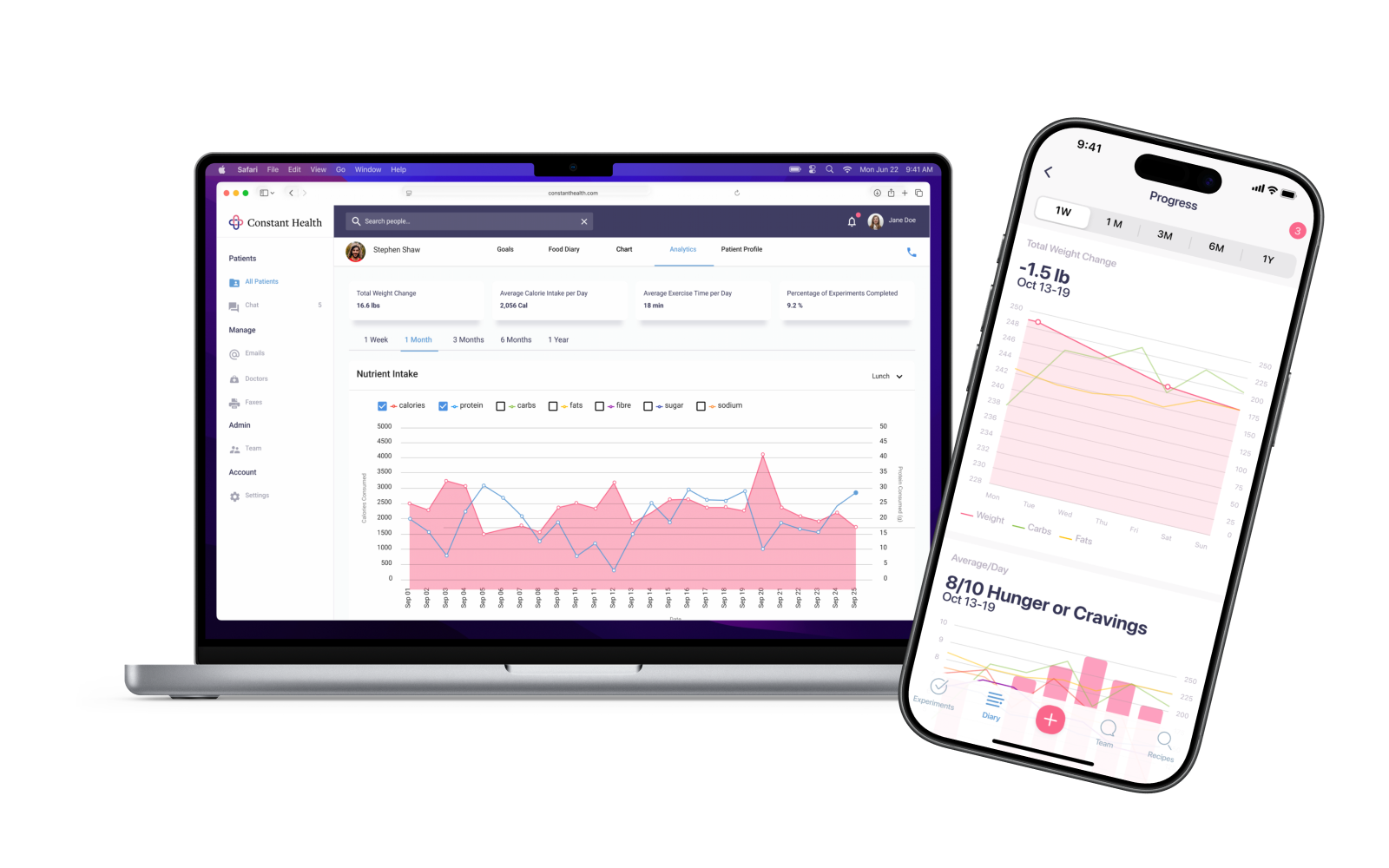
Constant Health
A nutrition and behavior change platform built with a clinical team, from early designs through launch.
“MindSea implemented design solutions in places we would never have thought to put them. What we’ve got now is something that we’re really proud of.”

Russ Patterson, CEO, Halterix
“MindSea has been very responsive. The team has been supportive in helping us with various written materials and design sketches that we’ve been able to include in our grant proposals.”

Alex Mariakakis, University of Toronto
Are AI coding tools like Lovable, Replit, and Cursor HIPAA compliant?
Mostly no, with some exceptions worth knowing. The app builders that generate a whole product from a prompt will not sign a Business Associate Agreement at any tier. Some code editors will, but only on enterprise plans and only in specific configurations.
People ask this question loosely, so it’s worth being precise. No tool is HIPAA compliant by itself. Compliance is a property of your entire system, including your hosting, your database, your configuration, and the agreements behind each one. The BAA is the dividing line. A vendor that signs one can sit inside a compliant system, and a vendor that won’t has to stay away from real patient data.
| Tool | Will sign a BAA | What that means for you |
|---|---|---|
| App builders | ||
| Lovable | No | No BAA at any tier. Prototype only, synthetic data. |
| Bolt | No | No BAA in any published terms. Prototype only. |
| Replit | No | No BAA, no advertised HIPAA eligibility. Prototype only. |
| Base44 | No | No public BAA offering. Prototype only. |
| v0 | Enterprise only | Vercel signs BAAs, but v0’s compliance inheritance sits on the Enterprise tier. Confirm scope in writing. |
| Code editors | ||
| Cursor | Enterprise only | Available on the Enterprise plan. Confirm coverage before any PHI is involved. |
| Claude Code | Enterprise only, with conditions | Anthropic covers Claude Code under a BAA only with zero data retention enabled, on qualified accounts. |
| GitHub Copilot | By negotiation | Coverage requires a direct agreement with Microsoft rather than a standing offer. |
| Codex | Enterprise only, with conditions | Covered under OpenAI’s BAA on the Codex local client when signed in with a HIPAA-eligible account. Consumer tiers are excluded. |
Last verified August 2026. Vendor terms change often, so confirm current coverage directly before relying on this.
Editors and infrastructure are different things. Writing code in an editor is a different question from where your application runs. Even where an editor offers a BAA, that agreement covers the editor and not the platform you deploy to. The exposure starts when patient data lands somewhere without a signed agreement behind it.
Where an editor is covered, the coverage is usually narrow. Claude Code and Codex both qualify only through their local clients, on eligible accounts, in a specific configuration. Get the scope in writing rather than assuming your plan includes it.
Several model providers also offer BAAs on their APIs. Those cover the model call itself, while your deployed application sits outside them.
What should I look for in a healthcare app development agency?
Five questions worth asking before you sign anything.
- Will they sign a BAA. If a vendor handles PHI and won’t sign one, you can’t work with them on a HIPAA-covered product. Ask before anything else.
- Have they shipped in healthcare specifically. General app experience doesn’t transfer. Consent flows, audit logging, and clinical data models have failure modes you only learn by shipping them.
- Where does the team sit. Data residency rules and time zone overlap both matter. Ask where the people writing your code actually sit, since that can differ from where the company is registered.
- Can they name what your app triggers. A capable partner raises this early. They’ll tell you if your product may qualify as Software as a Medical Device or fall under state privacy law. If nobody raises this, they haven’t thought about it.
- Do they scope in phases. A single fixed bid on an unknown scope protects the agency. Phased scoping with a number attached to each phase protects you.
Common questions
How much does the assessment cost?
$5,000, fixed. If you move forward with the build, the entire amount credits toward your first month. The assessment then costs you nothing beyond the time it takes. If you decide not to build with us, you keep the plan and we part ways. There is no retainer and no minimum commitment.
Can you finish what I started in Lovable, Claude Code, or Replit?
Yes. We take AI-generated prototypes and rebuild them into healthcare products that can legally hold real data. We work with prototypes from Lovable, Bolt, Replit, Cursor, Claude Code, Codex, v0, Windsurf, and Base44. The tool matters less than what it generated. Every one of them leaves the same gap, with a strong interface sitting on a missing data layer, no audit trail, and no vendor agreements in place. MindSea has built software since 2007 with a North American team.
Do I have to rebuild my prototype from scratch?
Usually not entirely. Your screens, flows, and product logic tend to survive into the build, because they represent decisions you’ve already made and tested on people. We almost always rebuild the data layer. Your AI tool built authentication, permissions, storage, logging, and hosting to make a demo work, and a security review will find them. The assessment tells you which is which before you spend anything on engineering.
Can my vibe coded app connect to Epic or Cerner?
Not as built. EHR integration runs through HL7 or FHIR, and AI coding tools don’t generate that architecture. The technical work is only part of it. Connecting to Epic, Cerner, or a regional system also means agreements, sandbox access, and review processes, and those run on their schedule rather than yours. We scope what your specific integrations require, including what each one adds to cost and timeline.
What does a HIPAA compliant setup actually require?
You need signed BAAs with every vendor touching PHI, encryption at rest and in transit, and role-based access controls. You also need audit logging of every record view and change, a documented breach notification process, and workforce training. The technical pieces are the fast part. The agreements and documentation are what take time.
How much does it cost to take an AI-built health app to production?
Healthcare builds we scope typically land between $100,000 and $300,000. Integrations, compliance scope, and the number of user types drive where you fall in that range. An AI prototype usually lowers the cost of scoping, because you’ve already answered questions that normally take weeks of discovery. It rarely lowers engineering cost, because our team still builds the foundation to healthcare standards. The assessment gives you a range per phase that you can actually budget against.
How long does it take?
You may hear “90 days” a lot. It usually turns into 4-6 months once security review, integration testing, and app store approval get added. The plan takes two weeks and gives you real ranges per phase. What stretches a timeline is usually EHR sandbox access, security reviews, and app store approval for regulated categories, and those run on someone else’s calendar.
Should I hire a freelancer, an agency, or rebuild in-house?
It depends on whether your product carries regulatory weight. You’ll see offers to build an app in a month for a few thousand dollars. For a wellness or fitness product that never touches protected health information, connects to no EHR, and makes no clinical claims, that can be the right call. Once you handle PHI or integrate with clinical systems, the requirements change. You need a team that signs a BAA, carries insurance, and answers the phone when a health system sends a security questionnaire eighteen months from now. Rebuilding in-house works if you already employ engineers who have shipped regulated software.
What if my app gives clinical recommendations?
It may qualify as Software as a Medical Device, which brings a different regulatory pathway and lifecycle requirements. This changes cost and timeline substantially, and founders often reach us without knowing it applies. We flag it in the assessment.
What happens after
The plan is yours. Take it to your budget holder or another development partner.
If you build with us, your $5,000 credits toward the first month. Your build starts from the plan you already have, and every phase carries its own scope and its own number.