

AI-powered clinical decision support software has the potential to reduce physician workload and improve care decisions, but adoption depends on mapping the right features to the right clinical moments and getting the technology, trust, and regulatory questions right.
Key Takeaways
- The clinical workflow, not the technology, should drive every feature decision in an AI-powered CDSS. The right tool, surfaced at the wrong moment, is just noise.
- Adoption follows friction reduction. The fastest-growing AI clinical tools are the ones that ask the least of clinicians while delivering the most at the point of decision.
- Trust is not a given. Clinicians need to know how an AI model was trained, what evidence it draws on, and how current that evidence is before they will rely on it to support care decisions.
Physicians already average nearly 58-hour workweeks, with a mind-numbing 13 of those hours consumed by documentation, order entry, lab interpretation, and other indirect care tasks.
AI clinical decision support software (CDSS) is meant to reduce that burden and improve care decisions. It can, for example, shave 45 seconds off a routine task, which adds up to significant time savings across the entire clinical workload.
But in practice, a lot of these systems just sit unused in the corner of the screen. It’s like pushing a rope uphill. If the tool doesn’t move with how clinicians already work, it doesn’t move at all.
In our experience, the tools that get adopted are the ones that help clinicians make decisions faster and remove friction from existing workflows. Everything else tends to gather dust.
To understand why some systems succeed while others don’t, it helps to look at the different types of AI clinical decision support software tools emerging today and the moments in the workflow when those tools can help.
Where Clinical Decisions Happen During Care
Before thinking about features or technology, it helps to understand the actual shape of a clinician’s day, and this is specifically when and where decisions get made. In practice, clinical decisions are made at a few key moments, and each represents an opportunity for support, or a risk that a fancy AI tool will be ignored.
Before the patient encounter starts, physicians review prior appointments, active medications, and outstanding care gaps. These summaries set the stage for efficient visits. But, without structured data or intelligent summaries, clinicians can spend precious minutes hunting through charts, which eats into the time they would otherwise spend with the patient.
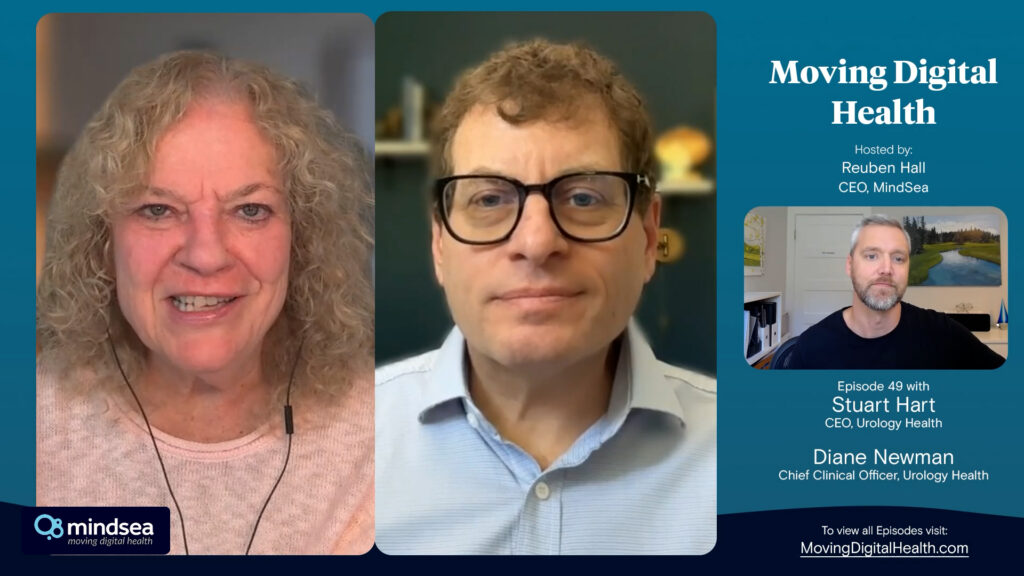
We asked Stuart Hart, CEO of Miami, FL-based Urology Health, about this challenge. We’re working together on clinical decision support software, and he described it as one of the most frustrating parts of practicing in today’s healthcare systems:
“You can’t realistically remember everything that’s been done previously for a patient. So you end up spending a significant amount of time digging through prior notes, labs, and data—time you simply don’t have when visits are already so short. It pulls you away from interacting with the patient and answering their questions. Most of the time, you’re skimming through a mountain of information and hoping you catch what matters most to optimize their care.”
During the visit, decisions are shaped by symptom assessment and physical examination. This is often where initial treatment choices are made, and where AI guideline nudges can have the most immediate impact. At prescribing, targeted alerts from a CDSS can flag when a clinician is reaching for a second-line treatment when a first-line option is still indicated. Follow-up appointments, when lab or imaging results come back, are where treatment gets adjusted or confirmed, but only if the clinician can quickly make sense of what’s in front of them. Buried or poorly structured results slow that decision down, or worse, mean something gets missed. Telehealth visits mirror all of these moments, just compressed and with less margin for friction.
The table below maps each of these moments to the features that support them, and is a useful starting point for thinking about what an AI-powered clinical decision support software actually needs to do.
| Clinical scenario | Clinical decision support software features that support it |
| Walking into a visit | Chart summarization, care gap flags, medication summary |
| During the visit | Symptom recording, guideline reminders, visit checklists |
| At prescribing / ordering | First-line treatment nudges, drug interaction alerts, antibiotic stewardship reminders |
| At follow-up | Results comparison, treatment adjustment prompts |
| Telehealth | All of the above, optimised for speed |
| Admin / billing | Inline level-of-service coding suggestions based on documented visit elements |
These are the moments where the right feature, surfaced at the right time, makes the difference between a tool that changes care and one that gets ignored.
A Nudge in the Right Direction
Dr. Hart provided a concrete example that highlights exactly where AI-powered clinical decision support software can improve care—without disrupting clinician workflow.
Antibiotic stewardship remains a persistent challenge in urology, particularly in the management of urinary tract infections (UTIs), where physicians may bypass recommended first-line therapies in favor of broader-spectrum antibiotics. While often well-intentioned, these decisions can lead to downstream consequences at both the individual and population level.
“Many physicians will skip recommended first-line antibiotics and go straight to second-line options,” Dr. Hart explained. “This is where AI-driven CDSS can make a real difference—by alerting clinicians in real time when care deviates from evidence-based guidelines.”
He emphasized that these tools are not just about flagging errors, but about reinforcing high-quality, evidence-based care:
“Too often, treatment decisions are based on what we learned during training—which may now be outdated—or simply on habit and personal preference. A well-designed CDSS can guide clinicians back to the most current, evidence-based approach, while also helping reduce the long-term societal impact of inappropriate broad-spectrum antibiotic use, including antibiotic resistance.”
Critically, the effectiveness of CDSS depends on when the insight is delivered. “The nudge needs to arrive at the prescribing moment—not after the fact. If they treat incorrectly, that doesn’t help anyone,” he added.
The implication is clear: timing is as important as content. The right information delivered too late becomes noise. Delivered at the right moment, it can meaningfully change clinical behavior.
Dr. Hart also offered a practical vision for how this support should appear in real workflows: “Just clearly displaying the guidelines… maybe a checklist. Did you address this, this, and this? And you can check it off.”
This approach doesn’t override clinical judgment—it supports it. By providing structured, real-time guidance, CDSS can keep clinicians in control while quietly steering care toward the most appropriate, evidence-based decisions.
Types of CDSS Tools and Why Adoption Varies So Much
Not all AI-powered CDSS works the same way, and adoption rates reflect that. The single biggest predictor of whether a tool gets used is how much new behavior it demands from the clinician.
At one end of the spectrum are ambient AI scribes, such as Abridge and Nuance DAX, that passively listen and draft clinical notes without requiring any change to workflow. Clinicians don’t have to do anything differently.
At the other end sit patient-facing intake and monitoring tools, where patients submit data (such as symptoms, vitals, and diary entries) between appointments. The clinical value is real, but there’s a practical catch in that for most reimbursement models, physicians only get paid when a patient comes in for a visit. Without a billable encounter attached, there’s little financial incentive to act on data that arrives outside of one.
In between sit EHR-embedded alerts and nudges, point-of-care reference tools like UpToDate and OpenEvidence, and risk scoring tools that run passively against patient data. Point-of-care reference tools alone already have significant traction, with more than 40% of US physicians using one outside their EHR as a personal reference.
The adoption numbers at the ambient and second-screen end of the spectrum are striking. Will Falk, Executive-in-Residence at the Rotman School of Management, explained more in a recent conversation: “Ambient scribes and second-screen clinical decision support have gone to 25% adoption in under two years. We don’t see adoption curves like that in digital health.”
That kind of uptake happens when tools fit existing behavior rather than trying to change it, but workflow fit alone doesn’t explain adoption. Clinicians also have to trust what the tool is telling them, and they don’t necessarily need anyone’s approval to use them if there is no PHI disclosed. Dr. Hart explains:
“My biggest worry is how it was trained—what information it has. Is it going to provide reliable information?”
It’s a fair concern, as general-purpose large language models can produce incorrect or fabricated outputs, with some studies reporting error rates ranging from roughly 17 to 45% depending on the context. In medicine, where accuracy is critical, this is a non starter.
The issue is further compounded by the rapid pace of medical advancement, with medical knowledge doubling roughly every two months. This means that models not continuously updated risk becoming outdated and potentially unsafe. Together, these factors underscore that for AI to be trusted in clinical decision-making, it must be built on transparent, validated data sources and continuously updated to reflect the latest evidence, or it risks becoming a clinical liability rather than an asset.
General-purpose AI models can and do produce plausible-sounding clinical information that doesn’t hold up. The tools earning clinician trust are generally built on RAG pipelines that ground every output in vetted, regularly updated evidence, not the open internet. And 91% of physicians say knowing that an AI was trained on expert-curated content is a prerequisite for trusting its outputs.
When Custom CDSS Development Makes Sense
Many healthcare organizations start with off-the-shelf CDSS platforms. They’re built to work across hundreds of clinical environments, which also means they rarely fit any single workflow precisely.
Custom development starts to make more sense when the clinical context is specific enough that generic tools leave meaningful gaps. A specialty might have decision moments, EHR integrations, or reimbursement structures that a general platform doesn’t account for. Alert logic may need to be calibrated to a particular patient population. Then some organizations need decision support grounded in proprietary protocols or specialty-specific literature that off-the-shelf platforms simply don’t include.
For example, a maternal health program serving a high-risk population might need alerts tied to specific gestational milestones, local preeclampsia screening protocols, and Medicaid reimbursement windows that vary by state. No general platform is tracking all three at once. A custom system can surface the right prompt at the right prenatal visit, tied to the exact billing codes that keep the program funded.
But before any of that gets scoped, you need to consider if the tool is augmenting clinical knowledge or functioning as a true decision-making system. The distinction is important. According to Dr. Hart, a tool that surfaces guidelines, summarizes charts, and prompts checklists is “just a guidance… it’s not a closed loop that’s going to treat the patient.”
That puts it in a very different regulatory category than one that drives treatment decisions autonomously. In the US, the FDA’s updated CDS guidance draws a line between tools that support clinician judgment and those that drive it. Tools that are opaque, time-critical, or autonomous likely require clearance as a medical device. In Canada, Health Canada’s SaMD framework applies similar logic. Settling that question early shapes everything from scope to cost to timeline, and which features are even on the table.
Once that’s clear, the next step is getting into the workflow before writing a single requirement. Most CDSS failures don’t trace back to bad technology. They trace back to the conceptualization stage, and building something technically sound that nobody uses because it was never mapped to how decisions actually get made in that specialty. It would be like planting the right crop in the wrong season.
Dr. Hart offers clear guidance for teams building solutions in unfamiliar clinical domains:
“Work with experts in that particular field. Really define what the problem is—and the right treatments for that problem.”
His advice underscores a critical principle in healthcare innovation: without deep domain expertise, it’s easy to misidentify the problem or design solutions that don’t align with real-world clinical practice. Engaging specialists early ensures that both the problem definition and the proposed interventions are grounded in evidence, clinically relevant, and ultimately more likely to succeed.
MindSea’s blueprint is the structured process we use to do this work, from mapping real decision moments to testing with clinicians, before a single line of code gets written.
What Separates the CDSS Tools That Work
The AI-powered CDSS tools that earn adoption share a common trait in that they make the path to a good decision faster without asking clinicians to change how they work. Ambient documentation, inline nudges at the prescribing moment, and clean pre-visit summaries all work because they fit the existing shape of clinical workflow rather than adding to it.
If you’re weighing whether a custom CDSS makes sense for your organization, we can help you figure that out before you spend a dollar on development.
Book a discovery call or explore our CDSS development services to find out more.
AI Clinical Decision Support Software FAQs
Why do clinical decision support tools have low adoption rates?
Most CDSS tools fail because they were built around an idealized clinical workflow rather than a real one. Tools that interrupt existing processes, trigger too many alerts, or pull clinicians out of their EHR get abandoned. The tools that stick are the ones that reduce friction rather than add it.
What features drive clinician adoption of AI clinical decision support?
The features with the highest impact are those that save time at specific decision moments, such as pre-visit chart summaries, inline prescribing nudges, first-line treatment reminders, and antibiotic stewardship alerts. Ambient documentation has seen the fastest adoption of all because it asks nothing new of the clinician.
When does a CDSS require FDA clearance in the US?
It depends on how much the tool is doing on its own. The 21st Century Cures Act lays out four criteria that keep CDS software outside of device regulation: it doesn’t analyze images or signals, it’s built for healthcare professionals, it lets clinicians see why a recommendation was made, and it supports their judgment rather than replacing it. Hit all four, and you’re likely in the clear. Miss one, especially if the tool is opaque, autonomous, or making calls in time-critical situations, and you’re probably looking at FDA clearance. The FDA updated this guidance in January 2026, and the lines are still shifting.
When does Health Canada regulate a CDSS as a medical device?
Health Canada uses a similar four-criteria framework to the FDA. If the software has a medical purpose (diagnosing, treating, or mitigating a condition) and the clinician can’t independently verify the basis for its recommendations, it likely qualifies as SaMD and needs a medical device licence. Software that only informs a clinician’s judgment without driving diagnosis or treatment decisions may fall outside that definition.
How do you ensure AI recommendations in a CDSS are clinically trustworthy?
Trustworthy CDSS architecture typically uses robust RAG pipelines that ground outputs in vetted, regularly updated clinical evidence rather than general-purpose models. Transparent evidence sourcing and continuous content updates are essential as medical knowledge evolves quickly, and a static model becomes a clinical liability.