
If you’re building a fitness or behavior-change app, you’re designing against one of the oldest instincts in the human body. We evolved in energy-scarce environments where burning calories without a reason was a bad bet. That instinct hasn’t gone anywhere, which is why only about 20% of Americans get the recommended minimum amount of exercise, and why the elevator button gets pressed so much more than the stairs.
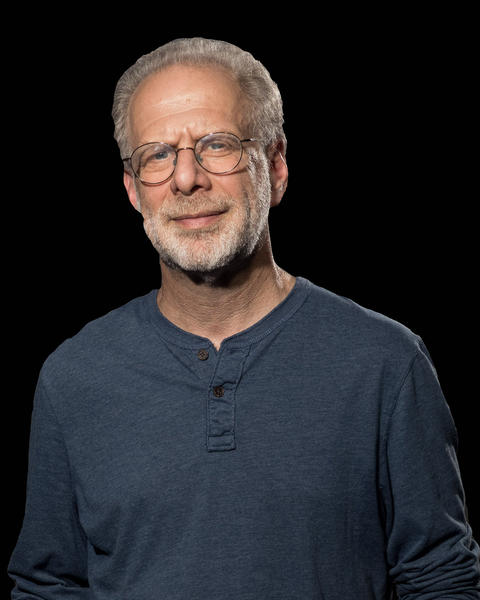
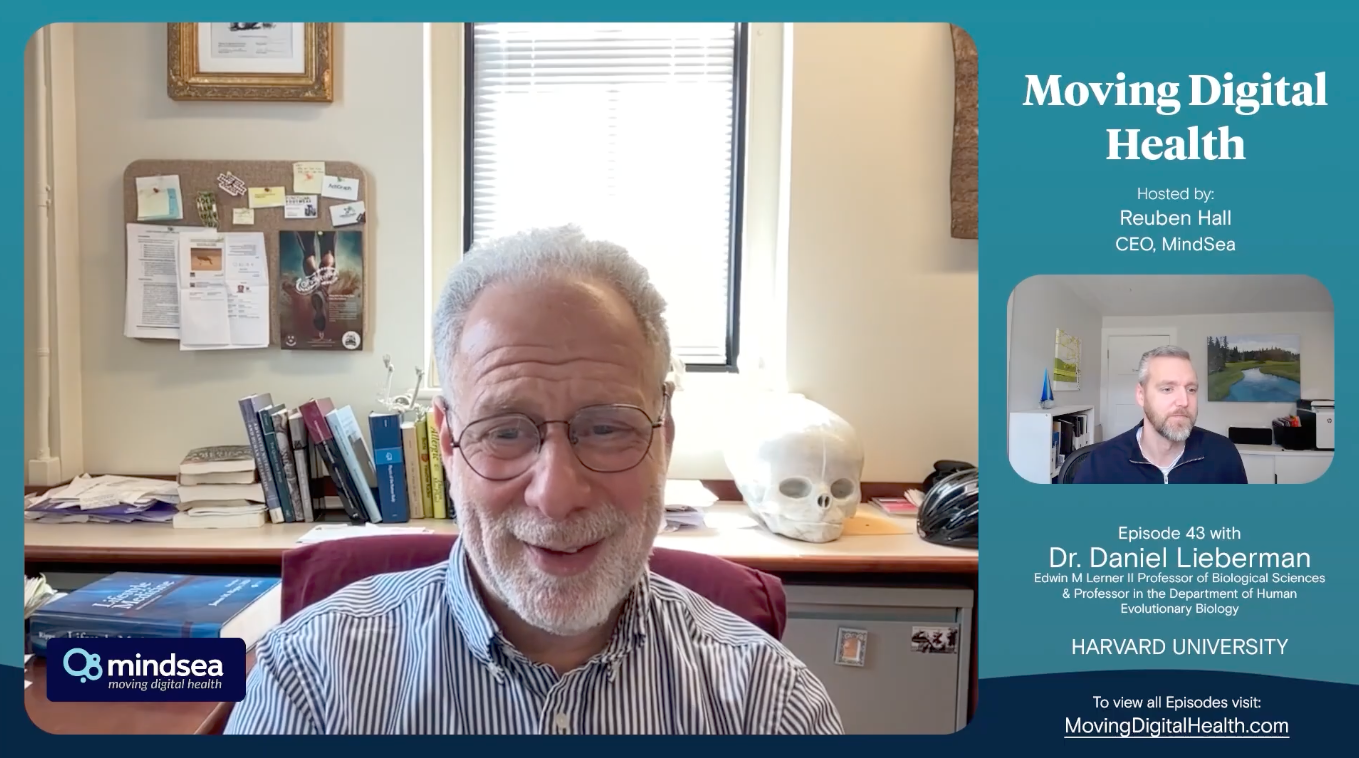
In this episode of Moving Digital Health, host Reuben Hall speaks with Dr. Daniel Lieberman, professor of biological sciences and former chair of the Department of Human Evolutionary Biology at Harvard. Dr. Lieberman makes the case that one of the most powerful design levers for getting people to move is social connection. He walks through why Peloton works despite being a screen in a basement, why Strava motivates one type of user and alienates another, and what his team learned building the Crimson ZIP app with us at MindSea to get Harvard students moving.
For anyone designing for adoption, retention, or behavior change in healthcare, the takeaway is concrete. Data, streaks, and rings help some users. For most, the feature that actually sustains engagement is the one that makes exercise feel like time spent with other people. Below, we cover how social design interacts with human instinct, where wearables still fall short, what goes wrong when metrics become stressors, and what hunter-gatherer data should (and shouldn’t) change about your product targets.
“We’ve invented this thing called exercise in the modern world where physical activity has become optional, and where there’s a deep and fundamental instinct to kind of avoid it.“
– Dr. Daniel Lieberman, Professor of Biological Sciences, Harvard University
Topics Covered in Episode 43 of Moving Digital Health (Dan Lieberman):
- What is evolutionary mismatch, and why does it matter for human health today? (00:48)
- Are we fighting a losing battle against our instinct to conserve energy? (03:05)
- Is our biology adapting to the modern environment at all? (06:39)
- Why is social commitment so much more powerful than a solo exercise plan? (10:39)
How do digital fitness communities like Strava satisfy our evolutionary need for movement? (14:18) - Can constant monitoring of health data become its own mismatch? (17:02)
- What is the active grandparent hypothesis, and how should it shape digital health tools for older adults? (21:10)
- What have you learned from building the Crimson ZIP app to get students more active? (25:59)
- If a hunter-gatherer wore an Apple Watch for a week, what would surprise us? (31:03)
- What modern profession comes closest to a hunter-gatherer’s daily activity level? (33:46)
- How fitness apps move us in the right direction toward adapting to our modern environment (35:40)
Find Moving Digital Health on Apple Podcasts and Spotify, and subscribe to the MindSea newsletter to be notified about future episodes.
Read Transcript:
Reuben Hall (00:01)
Welcome to Moving Digital Health, a podcast series from Mindsea Development. I’m your host, Reuben Hall, CEO of MindSea Each episode we sit down with leaders and innovators in health care to hear their personal stories and explore how they’re moving digital health forward. Today, I’m joined by Doctor Daniel Lieberman. He is the Edwin M Lerner II Professor of Biological Sciences, former chair of the Department of Human Evolutionary Biology at Harvard University and a pioneering researcher in human evolutionary biology.
Reuben Hall (00:18)
Through his books like The Story of the Human Body and Exercised, he has fundamentally changed how we think about sitting, running, and why we’re so naturally inclined to avoid the gym. Dan, welcome to the show.
Daniel Lieberman (00:45)
My pleasure. Thank you
What is evolutionary mismatch, and why does it matter for human health today?
Reuben Hall (00:48)
So much of your work is centred on the idea of evolutionary mismatch, the conflict between our ancient bodies and our modern high-tech environment. Could you briefly define that concept for us and explain why you feel it’s the most important lens for understanding human health today?
Daniel Lieberman (01:07)
So I’m not sure it’s the most important lens, but it’s a very important lens. But a mismatch is just essentially, it’s how evolution works. And mismatch is when, an organism is inadequately or imperfectly adapted to a novel environmental conditions. Right. And, and that causes and the result of those mismatches are the result. What happens is that you get conditions, often diseases that become more chronic or more severe. So, you know, a simple example would be that if you took a, you know, a zebra who’s adapted to living in the, you know, the Serengeti and you moved it to, say, northern Canada, that zebra would be very much mismatched, right? It would not be well adapted to those environmental conditions. And the thing is about humans. So all animals get get, you know, mismatches drive evolution.
Daniel Lieberman (02:00)
But the thing about humans is that because of our culture, because of technology, because of how we change our world around us, we have created an incredible speed and with incredible force, all kinds of mismatches that, that cause us to, to get sick and die and have other conditions, you know, for everything from, you know, myopia, which, you know, is now very common around the planet. And cavities and flat feet, none of them, kill people. But we also, you know, heart disease and diabetes and Alzheimer’s and, and, you know, the list goes on, many cancers. These are all mismatches. And so, and so, you know, most of us are likely to die from mismatch and get sick from a mismatch. And so and so understanding mismatches requires not just medical science but also an evolutionary perspective. Because an evolutionary perspective explains not just how we get them but also why we get them. And that’s really important if you want to prevent them.
Are we fighting a losing battle against our instinct to conserve energy?
Reuben Hall (03:05)
Okay. And so you’ve also noted that humans are evolutionarily hardwired to avoid unnecessary exertion, to save calories. So in a world where, you know, we don’t have to chase down game and spend hours of the day gathering food, are we fighting a losing battle against our own biology and instinct to preserve energy?
Daniel Lieberman (03:35)
Well, I mean, and it’s complicated, but basically. Yes. You know, like all creatures, we evolved in energy limited conditions. Right? In the past, there were no supermarkets. There were no, you know, Uber Eats, there was no, you know, just abundant. You know, I can walk into a supermarket that’s just a few blocks from my house, and there’s something like 40,000 different kinds of food in that supermarket, this incredible amount of food. The abundance is extraordinary. Right. And a lot of those foods are designed, engineered, you know, to be hyper appealing and filled with calories and fat and sugar and whatever. And the result is we tend to get sick. Right. But it’s also true for physical activity. Right. Because when you’re energy limited. Right. When you’re, when you’re struggling to get enough energy to feed yourself and your family, it’s kind of a crazy idea to do what we now call exercise. So like this morning for example, I went for a, you know, five mile run along the river here. So I spent about 500 calories to do that run, was a gorgeous morning.
Daniel Lieberman (04:42)
But, you know, I didn’t need to do that. It was completely voluntary, unnecessary physical activity. Right. Which is what exercise is. Exercise I define as discretionary, voluntary physical activity for the sake of health and fitness. And in the past, when our ancestors were extremely physically active, in order to get the food that they needed to have to feed themselves and their family, going for a five mile run, when they’re also struggling to get enough energy would be a completely stupid idea, right? So, we’ve invented this thing called exercise in the modern world where physical activity has become optional and where, there’s a deep and fundamental, but also there’s a deep and fundamental instinct to kind of avoid it. And so we have this tension and the vast majority of us are not doing very well.
Daniel Lieberman (05:34)
So, only about 50% of Americans actually exercise at all, and only about 20% of Americans get what we think is the recommended minimum amount of exercise that you should get. So clearly our instincts are working against us. I mean, I’ll give you a simple example. Right outside my door here, is the elevator for the for the museum where I’m in. And I can tell you that… I can observe it all the time. There’s a constant stream of people taking the elevator instead of the stairs. Why? Well, because, you know, there were no elevators in the Paleolithic, right? It’s not a normal, thing to do, but it’s a deep and fundamental instinct to say, “Oh I’m going to press that button so you don’t have to climb up the stairs”. In fact, they press the button also to go down too instead of taking the stairs down as well. And then and then we shame and blame people for their instincts and which, of course, I think is a really bad idea because there’s nothing, they’re not being lazy. There’s nothing wrong with them, that they’re just being normal human beings. And we’ve engineered this environment that allows us now to obey our instincts.
Is our biology adapting to the modern environment at all?
Reuben Hall (06:39)
You mentioned before that, you know, human culture is changing so quickly that there’s no chance for our biology or evolution to you know, catch up to this new environment that we’ve created for ourselves. You know, is there, any sort of, you know, biological adaptations that, you know, have been happening? Oh, somewhat slow, but or any logical conclusion that, an organism would evolve to in this modern environment.
Daniel Lieberman (07:13)
Well, look, here’s how natural selection works. Natural selection works through a combination of variation. And some of that variation has to be heritable. So it has to be a genetic basis for that variation, and it has to result in… it has to have an effect on your reproductive success. And almost all the diseases that we’re getting from inactivity and from diet, etc., almost all of them don’t really, you know, make us sick. Not to mention kill us until we’re grandparents. So in effect, they’re essentially silent to selection. But even more importantly… so that’s one issue. The other issue is that, a lot of these, you know, selection only happens, it happens really slowly, right? It only happens… you can’t design selection. It happens if there’s variation that exists that has strong reproductive effect.
Daniel Lieberman (08:06)
And so it’s slow. It’s incredibly slow. So, you know, the changes that we’ve observed in our environment, you know, over the last few generations we’ve, I mean I, we just talked about the elevator in my building, when I was a student here, I was an undergraduate here. There was a key. You had to have to use that elevator. Now there’s a button. Right. So only the professors had keys. Now, now. But now everybody can take the the elevator. Right. So we’ve increased the, you know, the ability for people to not take the stairs anymore in just a few years, so that the shifts that are occurring, the, the environmental shifts are occurring are so incredibly rapid. Whereas the genetic changes take generations, hundreds of generations to occur. So if you care about yourself or your grandchildren or your great grandchildren or even your great great great great grandchildren, waiting for natural selection to solve the problem, A, it’s not going to happen and B, that’s that’s not the right solution. So look, we can’t change our genes.
Daniel Lieberman (09:06)
But what we can do is change our environment. And so I think that’s the the key. We need to figure out how to change our environments, in a way to, help us, overcome some of the instincts that most of us want to overcome. I mean, I don’t know many people who don’t want to exercise. Most people who don’t exercise would like to be more physically active as they struggle to do it in an environment and in a world where it’s completely unnecessary and often difficult. I mean, you know, in some places it’s hard to find the stairs in the building right, the elevator’s right in front and center, and you have to hunt around and find the stairs. In fact, the hospital.
Reuben Hall (09:46)
Yeah it’s like I’ll find a fire door to. Yeah. So it’s it’s hard to find it and it’s hard to push open. And then every floor you got to go through another door to. They do make it very inconvenient.
Daniel Lieberman (09:58)
Yeah. Exactly. And you know, a lot of some people living in places where there are no sidewalks, where there’s, you know, where there aren’t, playgrounds and, and the kinds of facilities that you need for being physically active. And, you know, the list goes on, right? Where people have two jobs, three jobs. They’re commuting long distances in their cars. They’re exhausted when they get home. I mean, they would like to exercise, but they’ve got kids. And, you know, we all know how it works, right? It’s not that they want to be, couch potatoes, but the life forces us to become couch potatoes. And, so we need to find ways to help each other without being, you know, judgmental.
Why is social commitment so much more powerful than a solo exercise plan?
Reuben Hall (10:39)
Yeah. And and you’ve argued that, you know, nearly all successful exercise interventions, share the quality of social commitment. So why is that so much more powerful than, you know, just trying to, you know, follow a coaching plan or, following your streak on your own.
Daniel Lieberman (11:00)
Well, because, you know, let’s go back to that initial, issue we talked about, which is, you know, why people are physically active. And I would argue, and in my book exercised, I make the case that we evolved to be physically active for two reasons and two reasons only. One when it was necessary, or second, when it was rewarding in some way. Right. And sometimes it’s necessary and rewarding. Right. Like to get food, it’s necessary to get food. And it’s also rewarding to get food. And we’ve now live in a world where, where physical activity is no longer really necessary. I mean, you can live your whole day without ever moving. And a lot of exercise is really unrewarding, right?
Daniel Lieberman (11:38)
I mean, I put people on treadmills for a living, but I tell you, I hate running on a treadmill. I mean, it’s a nasty, horrible machine that makes you work really hard, gets you nowhere, it’s noisy and you can fall off it, etc.. I mean, who likes a treadmill? You can try to make it more enjoyable by, you know, listening to a podcast or watching something while on the treadmill. But, that kind of makes it more tolerable. But it’s way less enjoyable than going for a run outside. And guess what’s even more fun is going for a run outside with friends, right? So, and of course, because we’re social creatures and so for a lot of people, the best way to make physical activity rewarding is to make it social. And that can be many ways like going for a walk with a friend. I mean, who considers that exercise or going dancing, right? Dancing is intrinsically social. Every culture has dancing, we don’t do it enough. But, but that’s obviously social. Who thinks about, you know, exercise is, dancing is a form of exercise or or, you know, I mean, yesterday, well Sunday, I went for a run with a whole bunch of friends.
Daniel Lieberman (12:47)
Right. And, it was great. We chatted, we gossiped, we talked, you know, as the miles slipped by. I certainly ran farther than I would’ve otherwise. And it was great. I had a good time. Right. But what was fun wasn’t so much the running. It was the fact that I was having a great time talking with my friends. So, you know, study after study shows that when people make exercise social, they’re more likely to do it, they’re more likely to do it again. And they’re more likely to enjoy it. And, you know, it’s not always the case, but it’s often the case.
Reuben Hall (13:26)
I definitely see your point there. And, see those patterns in my own life as well, struggling to find the time to, to get the fitness in. But, I agree, when you’re, you know, you’re dealing with a friend or a team, that social aspect, really keeps, keeps you moving. And also, I see it with my children, as well.
Daniel Lieberman (13:49)
Sure. I mean, we all to play. I mean, sports is basically kind of organized play, you know, and and we’re one of the few species that plays as adults. And play is intrinsically social. Right? So, you know, like playing a soccer match or whatever. I mean, there’s so many ways to make physical activity social and if we could do a better job of helping people do that, I think we would see physical activity rates rise substantially.
How do digital fitness communities like Strava satisfy our evolutionary need for movement?
Reuben Hall (14:18)
So we’ve seen the rise in digital fitness communities like Strava, for example. How do those digital connections, you know, satisfy our evolutionary need for, for movement, is, you know, can that be helpful as well as, in-person and social connection?
Daniel Lieberman (14:39)
I mean, it works for some people, right? I’m not on Strava. Partly because, I don’t know. I don’t want everybody on the planet knowing, you know, how much I ran last week. I mean, it’s just not this is not my thing. But, some people love it, right? And find it really motivating. Partly. I mean, I have a good friend. I run with, once a week, and she is serious Strava type. And she will sometimes do extra running because, you know, it’ll look good on her Strava. You know, and if that motivates you, that’s great. So for some people, it’s really terrific. I think for some people it’s off putting as well.
So Strava works for some people, not for everybody. Right. I think if you’re struggling, it might not be the best platform, but, you know, let a thousand different kinds of ways to help people bloom. And for those who like that sort of thing, that’s great. And but there are other, as you know, fitness apps like, you know, my wife has a Apple Watch and she loves to close her rings. You know, she’s pretty physically active, but I mean, sometimes, sometimes she’ll, like, exercise without her watch. And then she realized that she didn’t get any credit for it. And she’ll.
Reuben Hall (15:52)
I know, it’s so disappointing.
Daniel Lieberman (15:54)
And she’ll do extra just to make sure that her watch knows that she did it right. So and that’s great. You know it works for her. So whatever works is good as long as you find something that enhances your experience and makes you more motivated, you know, there’s not going to be one size fits all solution to the digital fitness world.
Reuben Hall (16:20)
Yeah. And I’ve definitely tried Strava myself. And I find I’m selective about what I put on there. So if I felt it was a good workout or if it was long enough or intense enough to put on Strava, then I’ll share that and be like, okay, that’s people appreciate that. But like I would say, if I was you know, inactive for a couple months, I’m just trying to get back into it. I’m going really slow. I’m like, I’m not posting this.
Daniel Lieberman (16:47)
Exactly. Terrible. Well, I broke my toe this winter. I dropped my laptop perpendicularly on my toe, and I had to stop running for like five, six weeks. And, you know, if I had been on Strava, that would have been, you know, a disaster, right?
Can constant monitoring of health data become its own mismatch?
Reuben Hall (17:02)
Yeah. Yeah. No, just, go dark and then try and get back into shape and then start posting once I’m in shape again. But, there is, you know, on the other side, there’s a concern that, you know, some people just, you know, take it overboard and are constantly, you know, monitoring their health data, and developing anxiety around, like, obsession about, you know, fitness and, you know, ever, trying to push the limits of, you know, how many kilometers they can get in a week or you know how many calories you’re burning, you know, is that hyper awareness of, activity metrics can that be, you know, a mismatch as well?
Daniel Lieberman (17:47)
Oh, I’m sure it can. I mean, I’m not an expert on this topic, but I have friends who are like this and people who are, you know, obsessing about all the metrics they’re getting from, you know, their pulse and their, you know, all these data that, that these wearables can now provide.
Sometimes it’s unclear what to do with some of this information. And, I mean, a good example, another example would be sleep, right. I mean, most of us know when we’ve had a good night’s sleep, you know, when you wake up feeling rested, right? Or you know, that you didn’t get enough sleep last night. But there are people, and I won’t name names, who they wake up in the morning and they check their, you know, wearable. And then they for some reason, they decide they didn’t get really good sleep last night. And, you know, these wearables aren’t perfect. And, and I think it just makes them stressed. And of course, stress, you know, elevates cortisol levels.
Daniel Lieberman (18:53)
Cortisol is an arouse hormone. And if your cortisol levels go up, guess what? You’re not going to sleep as well. So I can it can instigate a vicious circle. And so I think, you know, I, I’ve seen this with people who, who try continuous glucose monitors. I mean, I guess. Yeah, if you wear one of these things, you’ll see your blood sugar levels go up after you eat a meal. But what are you going to do with that information? Well, of course, your blood sugar levels go up after a meal and but, and everybody has different responses. So how do you evaluate, what to do with that information is complicated. And I think most of us have no idea how to do that.
Daniel Lieberman (19:31)
And so, I think it can backfire with some individuals. I mean, sure, there’s useful information, but, I think we need to figure out how to help people find the right information for them, given their particular circumstances and their needs. But without causing harm. And I don’t know the answer to that question, though.
Reuben Hall (19:56)
I have to say, one of the most, stressful experiences of my life was, when my daughter was a baby. And, I think it was a gift. It was like, an infant heart rate monitor for the crib. So there’s a little pad underneath, goes underneath the mattress, when they’re sleeping. It checks on the heartbeat. And then if it doesn’t detect a heartbeat, then the alarm goes off in the parent’s bedroom. You can guess what happens. Like the she rolls off the mat onto the edge of the crib. Oh, no. The no heartbeat detected alarm goes off in the parents bedrooms. Parents shoot out of bed freaking out like, oh my goodness. Of course for first time parents everything’s an emergency, rush over there to see what’s going on. And oh man, it was it was months until we realized that this was just completely, useless and having a negative impact on our life.
Daniel Lieberman (20:57)
Right? But of course. Yeah, you know, there’s no one size fits all, but I can imagine in some cases that could be really useful. So it depends on the circumstances.
What is the active grandparent hypothesis, and how should it shape digital health tools for older adults?
Reuben Hall (21:10)
Yes. Definitely a system that had less false positives, would have been, more useful for sure. Another thing you talk about in some of your books is the active grandparent hypothesis, suggesting that exercise actually turns on repair mechanisms that counteract aging. How could digital health tools be better designed? You know, for that demographic, the 60 plus, you know, grandparents to really think about repair more than just, you know, activity and intensity.
Daniel Lieberman (21:47)
Yeah. So that’s a really good question. So let me just back backtrack a little bit and talk about the active grandparent hypothesis. So, we’re an unusual species in that we evolved to live long after we stopped reproducing. Right. And hunter gatherers evolved to be, you know, grandparents and hunter grandparents. Or hunter gatherer grandparents are really active.
They spend a lot of time, you know, digging for tubers or, you know, hunting and taking care of children, etc. and that physical activity, in turn, helps them stay healthy as they age. And we know that right, exercise slows the rate of aging and increases your healthspan. Healthspan is the number of years you live without disease and hence increases your lifespan. Because before modern medicine, your healthspan was your lifespan.
And it turns out that the reason exercise is so healthy, physical activity is so healthy is that it’s stressful. When you’re physically active, you’re not only using energy, but you’re also you’re also causing stress throughout your body. Your mitochondria are producing this little reactive oxygen species, and, that can cause damage everywhere. And you take DNA and you know they cause havoc everywhere, right? You’re stressing the walls of your arteries every time you push blood through them at high rates and pressures, you’re causing little tears in your muscles and little cracks in your bone. Every system of your body is stressed, but because we evolved to be physically active, we evolved all kinds of repair and maintenance mechanisms, which we turn on in response to physical activity.
Daniel Lieberman (23:22)
So, for example, in the case of those reactive oxygen species, our muscles produce vast quantities of antioxidants, natural antioxidants that wipe up all that damage and more. So you end up, you kind of overshoot the damage, and so you end up better off than you were before. And so that’s why physical activity helps people live longer and stay healthy, basically. And the thing is that, as we age, physical activity is not less important, actually becomes more important because, because of course, that’s when the biological processes of aging have the most effect. And so as we design and think about ways to help people who are elderly to be physically active, one of the keys is to help them, you know, stay active, as they age. And one of the things that, one of the two major sort of categories of exercise. So one, of course, is aerobic exercise. And that’s what most monitors do. Right. If you have a heart rate monitor or something, it’s measuring your heart rate, which is telling you basically whether you’re doing moderate, vigorous or, you know, light physical activity.
Daniel Lieberman (24:37)
But that’s generally aerobic physical activity. But as we age, one of the most important kinds of exercise is to do strength training. Strength training helps maintain your muscle mass, so you don’t become, you get frailty, what the technical term is sarcopenia, which sarcoma means flesh and penia means loss. So flesh loss was the medical term. But basically you’re losing muscle mass as you age. And it’s really critical that elderly individuals do strength training, you know, at least two times a week in order to counter that muscle mass loss. So they don’t become really frail because if they don’t, what happens is that, you know, when you’re frail, then it gets harder to get out of your chair, it gets harder to do stuff. It gets harder to carry things. You become less active. And you kind of drive this cycle forward. And the problem is that most of the wearables that we have, pretty much all the wearables we have measure only aerobic, you know, cardio physical activity. And none of them really do strength. And so, we need, other kinds of wearables that at the moment don’t exist, to help people do that. And so, and, you know, maybe recognize, you know, when they’re not getting enough strength training so that they can do more.
What have you learned from building the Crimson ZIP app to get students more active?
Reuben Hall (25:59)
100%. And you’ve noted as well that, at your workplace, you know, Harvard, the vast majority of the students aren’t very physically active. And you’ve been critical of universities for, you know, dropping some of those requirements. I know we’ve, you know, worked together on the Crimson ZIP mobile app as an intervention to, you know, get people more physically active, but also, layer in that social accountability, aspect as well. You know, what have you learned from that, exercise of, of developing the app and seeing how people use it on campus and some of the data you’ve collected.
Daniel Lieberman (26:43)
Well, it’s hard. It’s really hard. So American college students, and Harvard College students are no exception, are, you know, they’re more active than some other, aspects of the population. But they’re no different from the rest of the world. And many of them are not getting as much physical activity as you expect them to, or they should get, should get and you know, it used to be that every university in the country and I’m sure it’s true of Canada as well, used to require, some kind of physical activity. They used to have sort of physical education requirements. And, in our case, for example, Harvard dropped them in 1970, during the Vietnam War. And since then, there’s been, you know, less and fewer students are engaging in exercise. So there are, you know, a fair number of athletes on campus and they’re doing just fine. But the non-athletes are, you know, well, they run the gamut.
From some who have trained for marathons and some who barely do anything. Right. And it has huge effects. Right. Because exercise not only has long term health effects, but exercise has important short term effects on depression and anxiety and mood and, also affects, sleep and all these aspects of health that are, you know, critically important for college students. And so we’ve been trying to figure out ways to get them more active. And, personally, I would like to see the university restore our physical education requirement, because I think there’s this idea that the mind and the body are somehow, you know, separate. And our job is to deal with minds and not bodies. And I completely reject that, reject that philosophy.
Daniel Lieberman (28:35)
But, afraid that I’m not going to win the day and get my colleagues to agree that we should restore a physical activity requirement, that would be considered some kind of unacceptable coercion. So…we coerce our students to do all kinds of other things, but that’s another story. But, so we’ve been trying, other methods. And so we tried working on this app, this Crimson ZIP app. And the idea again, is to make it very social. And to be honest, the problem with the app is that you know, as you might expect, the students who are really active, are the ones who are using it, and the ones who are less active are the ones who are less likely to use it. So we still haven’t managed to to crack that, not yet. But, you know, our hope is that as the app, people get more used to it and we make it more social, that maybe more and more folks will adopt it and it’ll begin to sort of take off in the way that some other sort of social apps have done. But, you know, it’s a work in progress. We always knew this would be a marathon, not a sprint. And so, we’re still, you know, in the developing, in the stages of developing it.
Reuben Hall (29:41)
I see. So it’s been a useful tool for, those students who are already, you know, active and engaging in those activities and, you know, helps them, you know, meet up and, and organize social sports events. But not exactly, you know, getting people, out of the chair who, who weren’t going to do that in the first place.
Daniel Lieberman (30:04)
So we haven’t got to the stage where we’ve been able to collect, do the kind of… we’d like to use the app to do some experiments, really to collect data. And we haven’t yet got to that stage yet, but we hope to do that soon and randomize students and test some hypotheses. But we’re not there yet.
Reuben Hall (30:22)
For sure, and I recognize that it is a long term endeavor. And the, you know, the longer you’re collecting that data for over, over time, hopefully it becomes, you know, more valuable, as you see, different, cohort come through the system. And, I know the team at MindSea really enjoyed the collaboration with the researchers and working on the app to promote the social exercise and accountability.
Daniel Lieberman (30:51)
Yeah. And, I’ve been actually involved in a little bit with the English government, which was trying to start thinking about trying to do something like this as well. So who knows, maybe it’ll and it’ll get larger.
If a hunter-gatherer wore an Apple Watch for a week, what would surprise us?
Reuben Hall (31:03)
So going back to our hunter gatherer roots, if, if a Hadza hunter gatherer was wearing an Apple Watch or some other fitness tracker for a week, what would we be surprised at when looking at their data?
Daniel Lieberman (31:21)
I think, I mean, lot of people have this idea that our ancestors, hunter gatherers, are these sort of crazy, active people who are doing, like marathon, sort of like physical activity levels or, you know, swimming the English Channel or climbing Mount Everest or whatever. And what you’d find is that they’re very physically active compared to your average person, but they’re not crazy physically active. They’re just kind of, you know, normally physically active. So they engage, based on data, for example, from heart rate monitors and accelerometers, they do about, you know, 2 – 2.25 hours a day of sort of moderate to vigorous physical activity, maybe about 20 minutes a day of vigorous, the rest is moderate. And the rest of the day, they’re doing kind of light activities.
So, although they spent about ten times more energy being physically active than, say, your average. Well, maybe ten times more steps or something. But, you know, it depends on how you want to count it, there’s different ways of counting physical activity. They’re much more active than your average American. We would be, I think many people would be surprised to see that they’re quite active and they’re very healthy levels of activity, but they’re not crazy active.
Daniel Lieberman (32:30)
And, I think that’s useful information because I think there are all kinds of myths out there about how, you know, what we evolved to, to be and, you know, you have these paleo fitness people who, you know, walk around carrying giant rocks and running barefoot and, you know, whatever they’re doing. It’s kind of a cartoon characterization of what life was like in the Stone age. And it wasn’t like that at all, at least based on our data from contemporary hunter gatherers. So, but they’re very active. The other thing is that, you know, as they get older, they do get less active. As far as we can tell from the very few studies. But even still, the most active, like among the Hadza, like a 70 year old Hadza is doing about 150 minutes of moderate physical activity a day.
Daniel Lieberman (33:26)
That’s in one day they’re doing what the US government, the World Health Organization are begging Americans to do in a week. Right. So that’s in one day and that’s like 70, 80 year old. So, you know, I think we have a lot to learn from them.
What modern profession comes closest to a hunter-gatherer’s daily activity level?
Reuben Hall (33:46)
So this might be tough to have an exact answer for. But you know, what modern profession or job, would be most, equivalent to the amount of activity, they’re getting in a day.
Daniel Lieberman (34:01)
Right? I don’t know the answer. I wonder about maybe somebody who, like, delivers mail in a city like, you know, here in Cambridge, our mail person walks from house to house instead of driving. So something like that. But look, the other thing we should think about this is an important point, which is that just because our ancestors did or didn’t do something doesn’t mean it is or isn’t what we should be doing, right? You know, it’s not like we’re, I mean, clearly it’s important that we be physically active, but it’s not like there’s a simple dose that you can get from the Paleolithic that we should replicate. The evidence inevitably points to the following sort of conclusion, which is that some activity is always better than none, and there’s a kind of an increased benefit from more.
Daniel Lieberman (34:48)
And of course, it’s complicated in terms of dose, in terms of intensity and frequency and duration, etc.. And then eventually the benefits sort of tail off. So there is no one. It’s not like you can give it like a medical dose, like for a pill. You know, this is what you should be doing. It doesn’t work that way. And I think that… So the key is really to think about, you know, if you’re struggling to be more physically active, try to figure out some way to be slightly more physically active, you know, take the stairs or more often than the elevator or, you know, park your car farther away from, you know, slowly, slowly build up, because anything, anything is better than than nothing. And as you do it, you’ll get better and better and and get fitter and fitter and you can kind of build on those shifts.
How fitness apps move us in the right direction toward adapting to our modern environment
Reuben Hall (35:40)
So even though, as you mentioned, exercise is kind of a modern medicalized invention, it’s still a good thing because it’s enabling a lot of people to be more healthy than they would without it. And at the end of the day, we shouldn’t try and, you know, be a hunter gatherer, because that’s what our ancestors were. But that’s not the environment we live in. It’s whatever level of activity allows us to lead a healthier life, is is good at the end of the day.
Daniel Lieberman (36:16)
Amen, I completely agree.
Reuben Hall (36:17)
And whatever tools help us get there, whether it’s, you know, closing our rings or, you know, seeing ourselves in the leaderboard of Strava, it’s basically, you know, whatever step in the right direction, whether it’s digital or social accountability. It’s a good thing at the end of the day.
Daniel Lieberman (36:38)
Absolutely. And another example of a social example is Peloton. You know, Peloton, when you do like a Peloton workout, even though you might be, you know, looking at a TV screen, somebody is exercising along with you, cycling or running or rowing or whatever, the Peloton thing you like. And even though it’s, you know, somebody is in a studio in New York or London and you’re in your, you know, your basement in Boston, it’s weirdly social. Right. And it works. So there are all kinds of solutions to this need. And there’s never going to be a one size fits all. And I think that as we, explore and develop more technologies, I’m hoping that we can, you know, help more people be physically active. Because, as you say, there’s very few things you can do that will have more effect on your health, both mental and physical and than staying physically active.
Reuben Hall (37:42)
I found the virtual cycling really engaging as well. So you’re on your bike and you’re, you know, have a nice big TV in front of you and you’re cycling through the side streets of an old town in France. And then this other virtual cyclist comes up beside you and starts going a little bit faster than you are, and you’re like, oh, I gotta keep up with them. And, you know, it’s you know, it’s all imaginary, but if it works. Right? It gets me pedaling faster and it’s like, whatever tricks you have to play to to get that pedal to move forward. It works. It works.
Daniel Lieberman (38:22)
Absolutely. But I often to wonder, like, what would my grandfather have thought of that? I mean, I’m sure he wouldn’t have been opposed to it, but he would be like, you’re doing what? I mean, why not just go out and bicycle or something? But I mean, it is a very strange modern technology. But if it works, and if it works for you, fine. But it’s….one of the jokes I love to make is that, you know, I have got in my basement, I bought all these weights, I bought these heavy metal things whose sole purpose is to be lifted.
I mean, imagine explaining that to, you know, our great, great, great, great great grandparents. You know, like you, you did what you spent your money on some heavy thing to lift just for no purpose other than to lift it. They’d think we’re nuts. But again, if they lived in our world, they would realize that maybe it’s a good thing.
Reuben Hall (39:15)
True enough. Well, thank you so much for the conversation, Dan. Really appreciate it. And thanks, everyone for listening to the Moving Digital Health Podcast. If you enjoyed this conversation, please go to movingdigitalhealth.com to subscribe to the MindSea newsletter and be notified about future episodes. Thanks so much.
Daniel Lieberman (39:36)
My pleasure.